
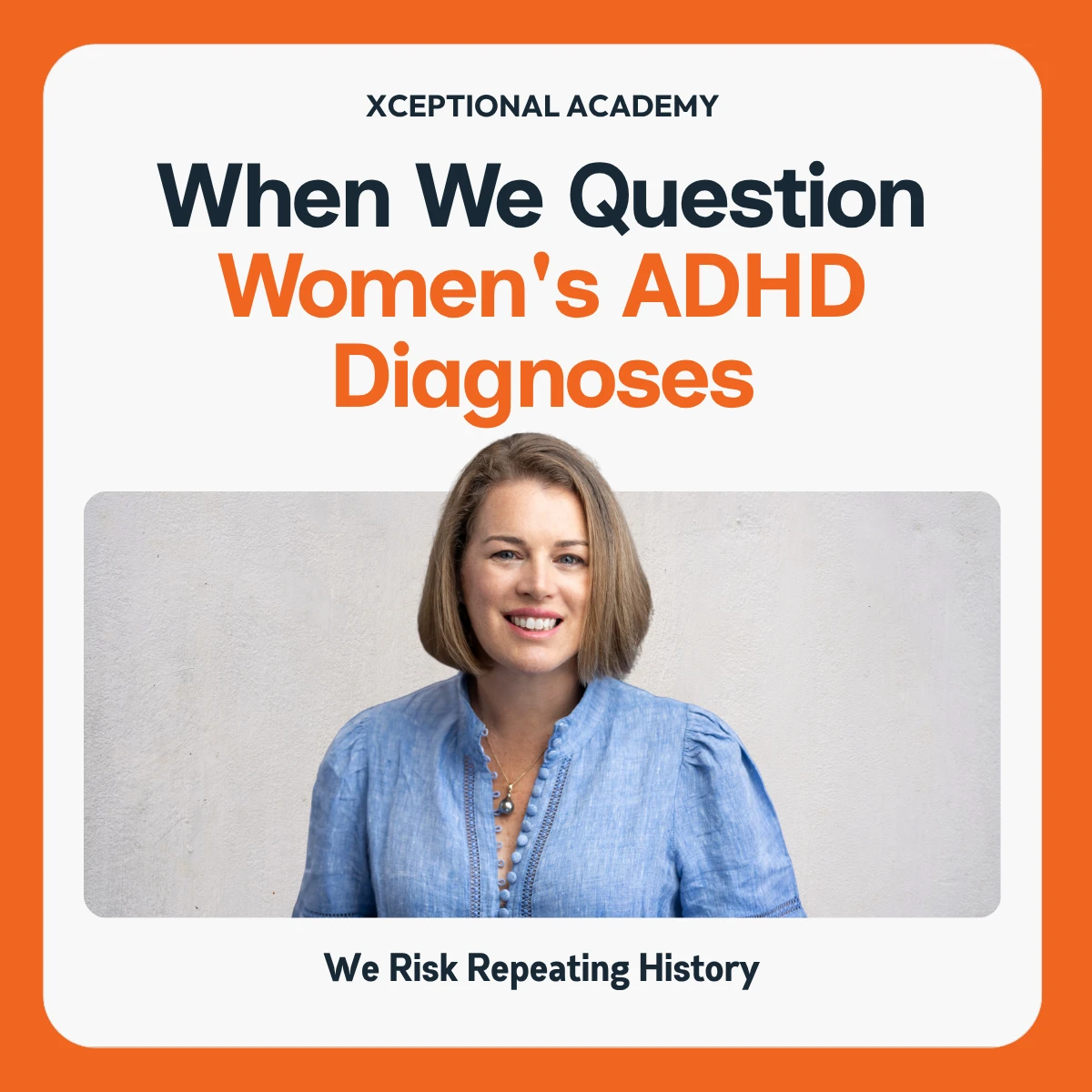
Over the past few months, I’ve watched several conversations unfold in the media questioning whether too many women are being diagnosed with ADHD.
As someone who has spent more than two decades working alongside neurodivergent individuals in education, workplaces and through one-on-one coaching, I understand why clinicians want diagnostic processes to remain rigorous. Accurate diagnosis matters. It always has, and it always will.
But I also know something else. I have sat with hundreds of women who have spent years believing they were lazy, disorganised, emotional, “too much”, or somehow falling short of everyone else’s expectations. Women who have spent decades wondering why life seemed to require so much more effort for them than it appeared to for everyone around them.
They weren’t looking for a diagnosis; they were looking for an explanation.
That’s why some of the recent public commentary from so called medical experts and media commenters concerns me. Not because we shouldn’t have conversations about maintaining high clinical standards. We absolutely should. Every person deserves a comprehensive, evidence-based assessment that considers the full picture.
What worries me is when the conversation shifts from improving diagnostic accuracy to questioning the legitimacy of women’s lived experiences. Women they have never met!
Blanket statements suggesting that “too many women are being diagnosed” don’t exist in a vacuum. They land with women who have spent years questioning themselves. Women who have finally begun to understand why they experience the world differently.
For some, those headlines don’t spark curiosity, they reignite self-doubt and fear.
We’ve Been Asking the Wrong Question
When I hear discussions about whether too many women are receiving ADHD diagnoses, I can’t help but wonder if we’re asking the wrong question.
Instead of asking, “Are too many women being diagnosed?” perhaps we should be asking, “Why were so many women missed in the first place?”
Because history tells us they were. For decades, our understanding of ADHD and autism was largely built on research involving boys. The children referred for assessment were often those whose behaviours disrupted classrooms, children who were visibly hyperactive, impulsive or unable to sit still. Those presentations shaped our diagnostic criteria, our screening tools and our clinical expectations.¹²
That research was invaluable, but it was also incomplete.
Girls were underrepresented in research, under-referred for assessment and often expected to adapt quietly to environments that didn’t meet their needs.³ As a result, generations of women grew up believing they simply needed to try harder.
What I See Every Week
One of the greatest privileges of my work is walking alongside neurodivergent adults as they begin to understand themselves.
Although every person’s story is unique, there are striking similarities. Time and again, women tell me they have spent years feeling as though they were constantly working harder than everyone else just to keep up. From the outside, they often look incredibly capable. They’re teachers, lawyers, nurses, executives, parents, business owners and university students.
People often describe them as organised, successful, reliable. What isn’t visible is the enormous amount of mental energy it takes to maintain that image. The colour-coded calendars, endless lists and constant overthinking. The hours spent preparing for meetings that others seem to walk into effortlessly and the exhaustion of remembering every appointment because forgetting even one feels like proof that they’re failing.
Many describe living with the feeling that they are only just holding everything together. I’ve lost count of the number of women who have said to me:
“I thought everyone found life this hard and suffered in silence.”
That sentence has stayed with me throughout my career.
Because they genuinely believed it. Not because they lacked resilience or lack intelligence. But because they had never been given a framework for understanding how their brain worked.
A Lifetime of Being Misunderstood
Many women who come to coaching have already spent years engaging with the healthcare system.
Some have been treated for anxiety or depression, some have experienced eating disorders, obsessive compulsive symptoms or chronic burnout.
To be clear, these conditions are real, significant and deserve appropriate assessment and treatment. They also commonly co-occur with ADHD and autism.⁴ However, what I have observed—and what the research increasingly reflects—is that for some women, neurodivergence was never considered until much later in life.⁵
When that happens, treatment often focuses on managing the consequences rather than understanding what may be contributing to them. Imagine spending thirty or forty years believing you’re disorganised because you don’t try hard enough.
Believing you’re forgetful because you’re careless.
Believing you’re overwhelmed because you’re weak.
Eventually, those beliefs become part of your identity.
The diagnosis doesn’t create those experiences. It simply provides a different lens through which to understand them.
ADHD Doesn’t Suddenly Appear at Forty
One of the misconceptions I hear most often is that adult women are suddenly “developing” ADHD. They’re not, what’s changing is recognition.
Over the past twenty years, our understanding of ADHD has expanded considerably. Researchers now recognise that girls often present differently to boys. They are more likely to experience inattentive symptoms, internalise their difficulties and develop sophisticated coping strategies that can mask their struggles.²⁶
Many become exceptionally good at observing others, working longer hours, over-preparing and compensating. From the outside, they appear to be coping, inside, many are exhausted.
I’ve had women tell me they arrive home after work and sit in a dark room for 30 minutes because they have nothing left to give.
These women are not incapable but the impact of maintaining the appearance of coping all day has required every ounce of cognitive and emotional energy they have. This is the cost of masking.
Autistic women often describe a remarkably similar experience. Research has shown that many consciously or unconsciously camouflage their differences in order to fit social expectations, making identification significantly more difficult.⁷
When we become better at recognising these presentations, diagnosis rates increase.That isn’t evidence that we’re lowering the bar. It’s evidence that we’re improving our understanding.
Diagnosis Isn’t About Labels
One of the biggest misconceptions I come across is the idea that people pursue a diagnosis because they’re looking for a label or hoping for special treatment.
In all the years I’ve worked alongside neurodivergent adults, I can honestly say that couldn’t be further from the truth.
Seeking an assessment is rarely a quick or easy decision. It can be expensive, time-consuming and emotionally exhausting. Most people don’t embark on that journey unless they’re genuinely trying to understand why life has always felt harder than it seems to for everyone else.
What I hear far more often is this: “I finally have an explanation.”
And almost immediately after that comes another emotion; Grief.
Grief for the years spent believing they were not trying hard enough. Grief for the opportunities they feel they missed. Grief for careers they walked away from, relationships that became strained, and the constant self-doubt they carried because they couldn’t understand why they found some things so difficult while appearing perfectly capable to everyone else.
One of the most common things women say to me is: “If only I’d known earlier.”
Not because they want to change who they are, but because understanding themselves sooner may have changed how they understood their own experiences. It may have changed the way they spoke to themselves. It may have led them to seek different supports, advocate for themselves earlier, or simply show themselves more compassion.
A diagnosis doesn’t change who someone is. It doesn’t suddenly give them ADHD or autism. It helps explain who they’ve always been. For many women, that understanding is life changing. It allows them to stop asking, “What’s wrong with me?” and start asking, “What do I need to thrive?”
That is a very different conversation.
A good diagnosis isn’t about defining someone by a label. It’s about replacing years of self-blame with self-understanding. And in my experience, that’s where meaningful change begins.
Words Matter
The way we talk about neurodivergence matters. Public conversations shape public understanding. They influence whether people feel safe enough to seek support, whether families recognise themselves in the stories they hear, and whether employers, educators and health professionals continue to challenge outdated assumptions.
When headlines suggest that “too many women are being diagnosed”, many women don’t hear a discussion about improving diagnostic practice.
They hear something much more personal.
“Maybe you’ve got this wrong.”
“Maybe you’re making excuses.”
“Maybe everyone struggles like this.”
Those thoughts aren’t new. They’re often the very messages women have spent decades telling themselves before they ever walked into an assessment.
Of course, diagnosis should be rigorous. Good clinicians should ask difficult questions, explore alternative explanations and take the time to understand the whole person. That’s exactly what good assessment looks like. But we also need to recognise that broad public commentary has consequences.
When we repeatedly question whether women are being diagnosed “too often”, we risk creating another barrier for those who have spent years convincing themselves not to seek help in the first place. Perhaps the conversation shouldn’t be about whether more women are receiving diagnoses but instead focus on why so many women spent decades without one.
Moving Forward
If there’s one thing I hope comes from the growing conversation around women’s neurodivergence, it’s this: Let’s stay curious.
Curious enough to recognise that our understanding of ADHD and autism has evolved. Curious enough to acknowledge that research is still catching up. Curious enough to listen to women’s experiences without dismissing them because they don’t fit the stereotypes we’ve held for decades.
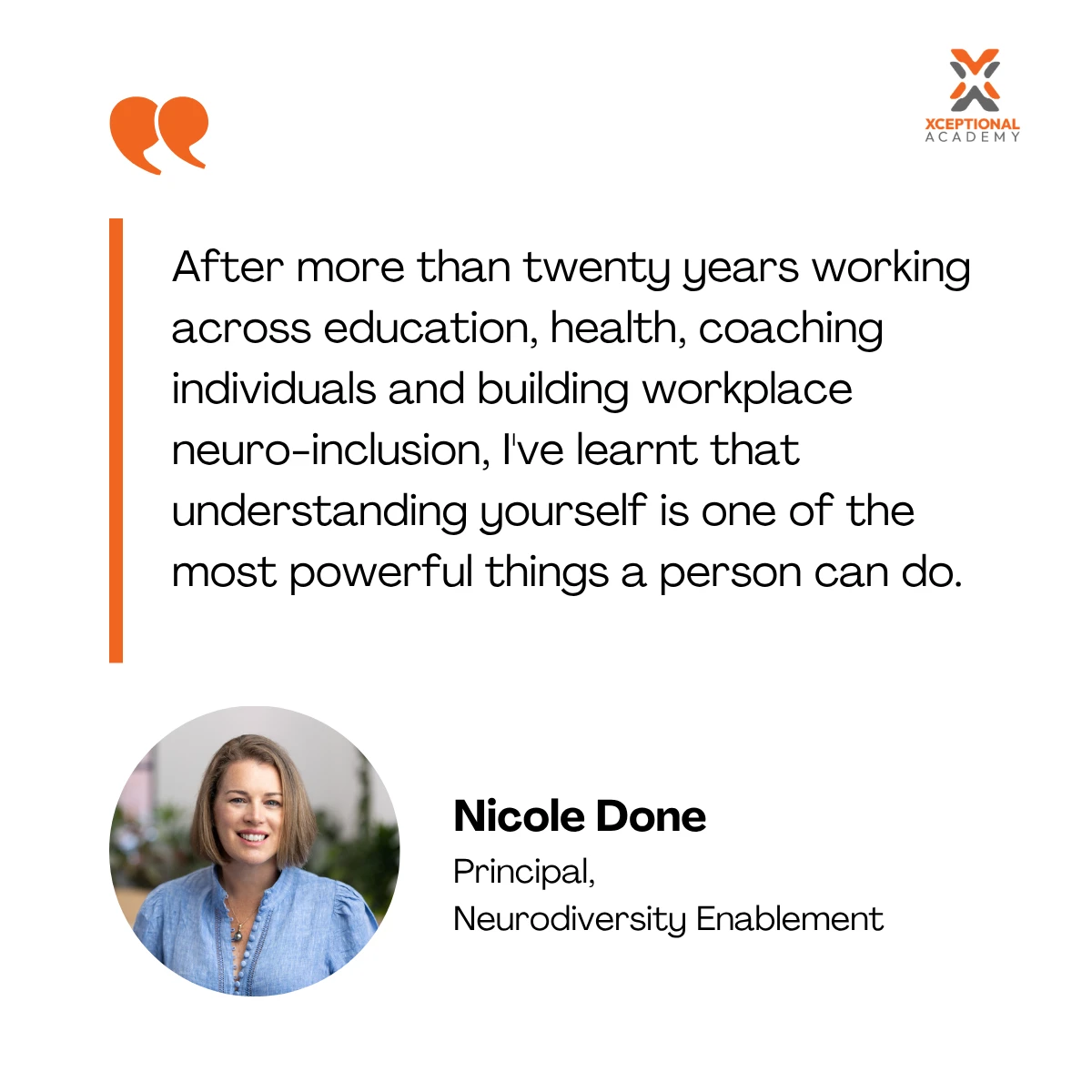
After more than twenty years working across education, health, coaching individuals and building workplace neuro-inclusion, I’ve learnt that understanding yourself is one of the most powerful things a person can do.
Let’s allow women to stop apologising for who they are and let go of years of self-blame. Let’s celebrate as they build careers that align with their strengths instead of constantly trying to “fix” themselves. Let’s nurture relationships that improve because they finally had the language to explain their needs.
A diagnosis isn’t the end of that journey. For many women, it’s the beginning. It provides a foundation for self-understanding, self-advocacy and, perhaps most importantly, self-compassion. Because this conversation has never really been about diagnosis. It’s about ensuring people have the opportunity to understand themselves, access the right supports when they need them, and build environments where they can thrive.
Surely that’s something worth protecting.
References
- Australian ADHD Professionals Association. Australian Evidence-Based Clinical Practice Guideline for ADHD. 2022.
- Quinn, P. O., & Madhoo, M. (2014). A Review of Attention-Deficit/Hyperactivity Disorder in Women and Girls. Primary Care Companion for CNS Disorders, 16(3).
- Young, S., Adamo, N., Ásgeirsdóttir, B. B., et al. (2020). Females with ADHD: An expert consensus statement. BMC Psychiatry, 20, 404.
- Kooij, J. J. S., et al. (2019). Updated European Consensus Statement on diagnosis and treatment of adult ADHD. European Psychiatry.
- Hinshaw, S. P., Nguyen, P. T., et al. (2022). Longitudinal outcomes for girls with ADHD.
- Rucklidge, J. J. (2010). Gender differences in ADHD across the lifespan.
- Hull, L., Petrides, K. V., Allison, C., et al. (2020). Putting on My Best Normal: Social Camouflaging in Adults with Autism Spectrum Conditions. Journal of Autism and Developmental Disorders.