How inclusive hiring practices unlock neurodivergent talent — and strengthen outcomes for everyone
There’s a quiet irony at the heart of most hiring processes. Organisations say they want innovation, creative problem-solving, and diverse perspectives — then funnel every candidate through the same rigid, socially performative interview format that systematically disadvantages the very people most likely to deliver those qualities.
For neurodivergent candidates — those who are autistic, ADHD, dyslexic, dyspraxic, or otherwise neurologically different — the conventional interview is often less an assessment of competence than a test of social masking. And it’s a test that tells organisations almost nothing about whether someone can actually do the job.
The evidence is difficult to ignore. Research from the Australian Bureau of Statistics suggests that fewer than 40 per cent of autistic adults in Australia are employed, despite the majority wanting to work. Meanwhile, a growing body of literature points to interview design — not candidate ability — as a primary barrier to workforce participation. Something in the process is broken. The question is what we’re willing to do about it.
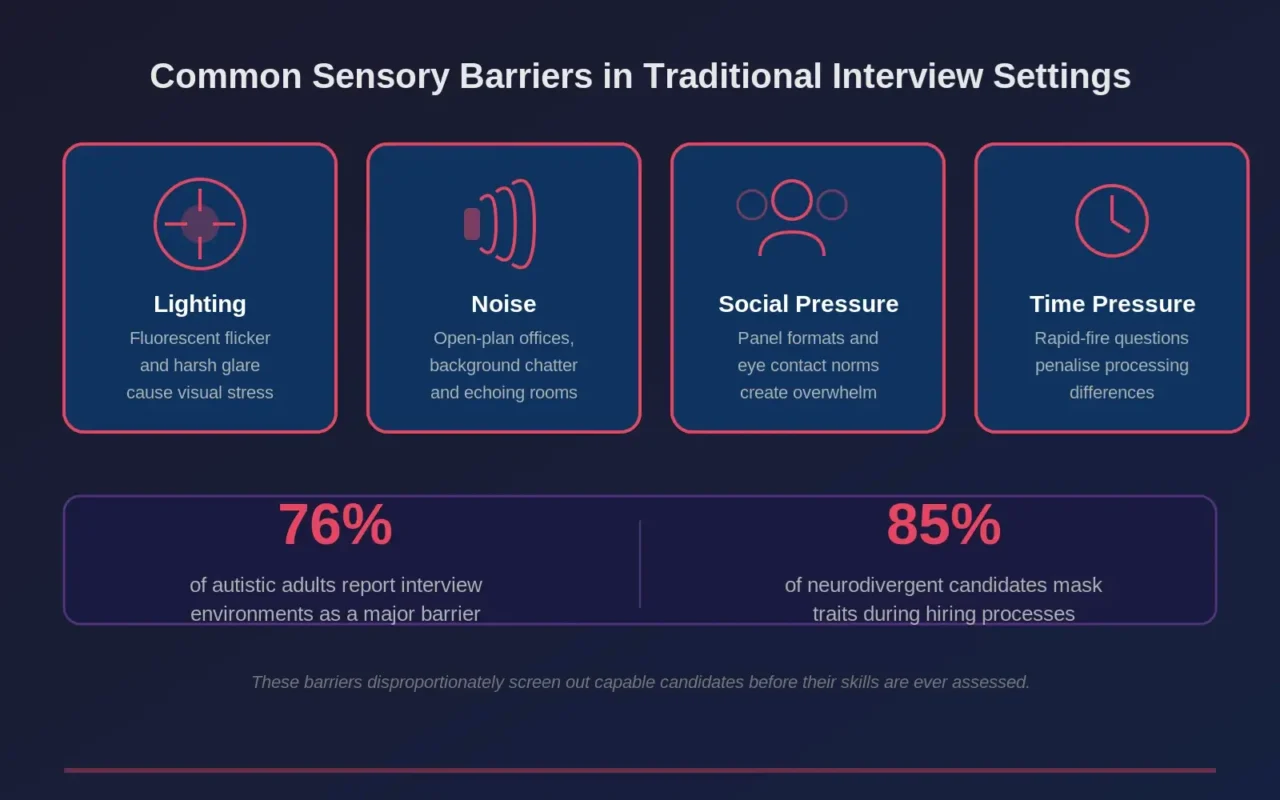
Figure 1: Common sensory barriers in traditional interview settings
The Problem We Keep Designing Into Hiring
Think about what a standard interview actually measures. A candidate walks into an unfamiliar room, often lit with overhead fluorescents that hum at a frequency most neurotypical people don’t notice. They’re expected to make sustained eye contact with strangers, decode implied meaning in vaguely worded behavioural questions, and generate articulate, structured responses on the spot — all while managing the sensory and cognitive load of an entirely new environment.
None of that is a proxy for job performance. What it is a proxy for is neurotypical social fluency: the ability to perform ease, to read unspoken cues, to package thoughts into a format that interviewers instinctively recognise as “confident” or “articulate.” For neurodivergent candidates, that performance is either exhausting, unnatural, or genuinely inaccessible — and the cost is exclusion from roles they’re perfectly capable of filling.
Professor Amanda Kirby, a leading researcher in neurodevelopmental conditions, has argued that traditional interviews are essentially “social auditions” that reward presentation over substance. When we privilege improvisation and social performance, we filter for a very narrow band of human communication — and we lose the rest.
Designing for Sensory Reality
Sensory-friendly interview design isn’t about creating “special” conditions for a subset of candidates. It’s about recognising that sensory environments shape cognitive performance for everyone — and that most interview settings have never been designed with this in mind.
The adjustments themselves are often surprisingly straightforward. Replacing fluorescent lighting with natural or warm-toned light. Holding interviews in quieter rooms away from open-plan noise. Reducing the number of interviewers in the room, or offering the option of a one-on-one format instead of a panel. Providing written questions in advance so candidates can prepare structured responses rather than improvise under pressure.
What’s less straightforward — and arguably more important — is the cultural shift behind these changes. Offering adjustments proactively, rather than waiting for candidates to disclose a diagnosis and request accommodations, sends a fundamentally different signal. It communicates that the organisation has already thought about access, that it doesn’t treat neurological difference as a problem to be managed, and that the burden of adaptation doesn’t fall solely on the individual.
Organisations like the Australian Public Service Commission have begun embedding sensory considerations into their hiring guidance, acknowledging that environment and format affect assessment validity. When the space works against the candidate, you’re not measuring ability. You’re measuring tolerance.
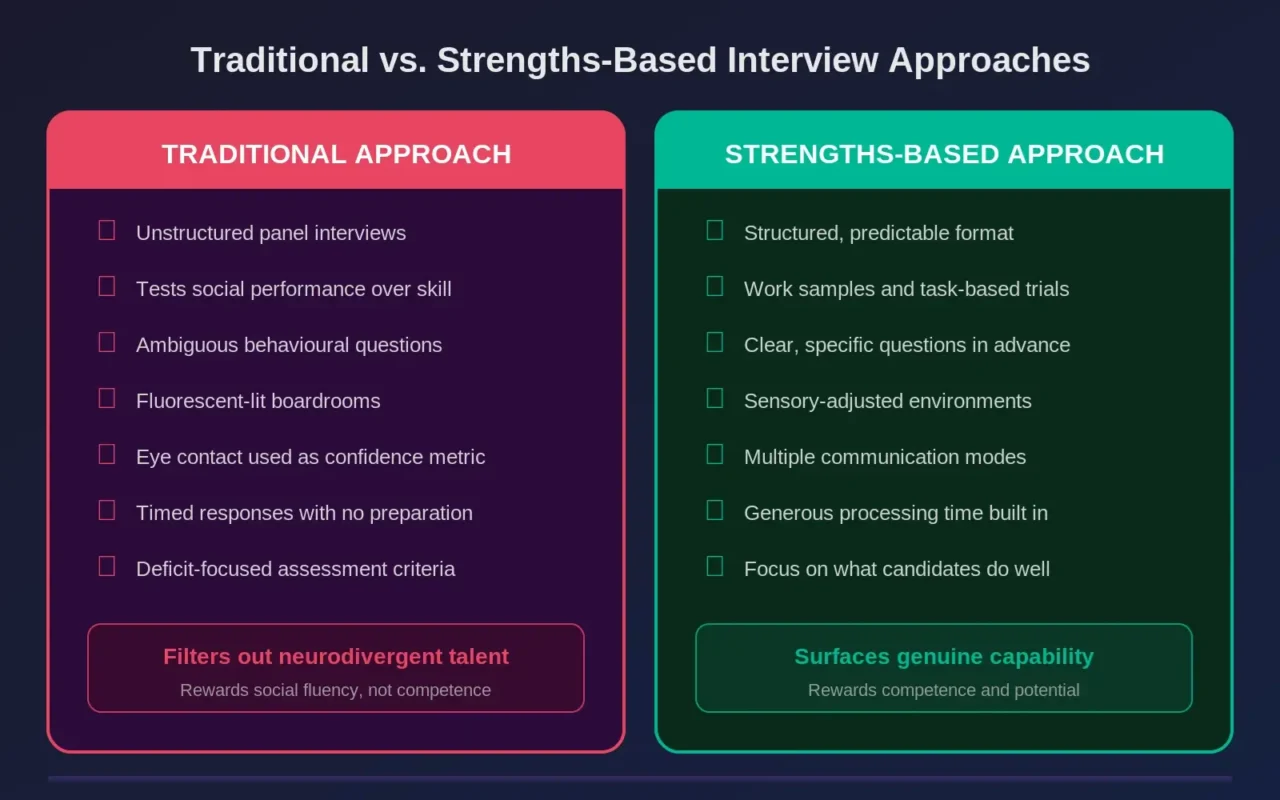
Figure 2: Traditional vs. strengths-based interview approaches
From Deficit Screening to Strengths Discovery
The strengths-based interview model flips a foundational assumption. Rather than scanning for weaknesses, red flags, or gaps in a candidate’s presentation, it asks: what does this person do exceptionally well, and how does that align with what the role actually requires?
This matters enormously for neurodivergent candidates, whose cognitive profiles are often “spiky” — marked by pronounced strengths in some areas (pattern recognition, sustained focus, analytical rigour, lateral thinking) alongside genuine difficulties in others (working memory, executive function, social reciprocity). A deficit-focused interview catches the valleys. A strengths-based interview catches the peaks. Only one of those tells you whether someone can thrive in a given role.
In practice, strengths-based approaches tend to incorporate work samples, task-based assessments, and structured interviews with clearly worded questions tied to specific competencies. SAP’s Autism at Work programme, for instance, replaced traditional interviews with team-based problem-solving exercises and extended work trials, giving candidates the chance to demonstrate ability in context rather than describe it in abstraction. The results were striking: retention rates above 90 per cent, and productivity metrics that matched or exceeded those of neurotypical peers.
The logic is disarmingly simple. If you want to know whether someone can code, watch them code. If you want to know whether someone can analyse data, give them data and see what they do with it. The interview question “Tell me about a time when you demonstrated leadership” tells you how well a person narrates leadership. It tells you almost nothing about whether they can lead.
What Good Looks Like in Practice
Organisations that have implemented these approaches report a consistent pattern: the changes improve hiring outcomes across the board, not just for neurodivergent candidates. When you design interviews that are clearer, more structured, and more closely tied to actual job requirements, every candidate performs more authentically — and hiring decisions become more predictive of on-the-job success.
Microsoft’s Neurodiversity Hiring Programme offers a four-day workshop format that replaces the conventional interview loop entirely. Candidates engage in team projects, receive coaching, and interact with hiring managers in low-pressure, skills-focused settings. The programme has expanded across multiple divisions — not because it was mandated, but because hiring managers found the quality of hires to be measurably higher than through traditional channels.
Closer to home, several Australian universities and government agencies have piloted sensory-friendly assessment centres with encouraging early results. The key elements tend to converge: transparency about the process, flexibility in format, assessment criteria anchored to role-specific competencies, and a deliberate shift away from social performance as a selection criterion.
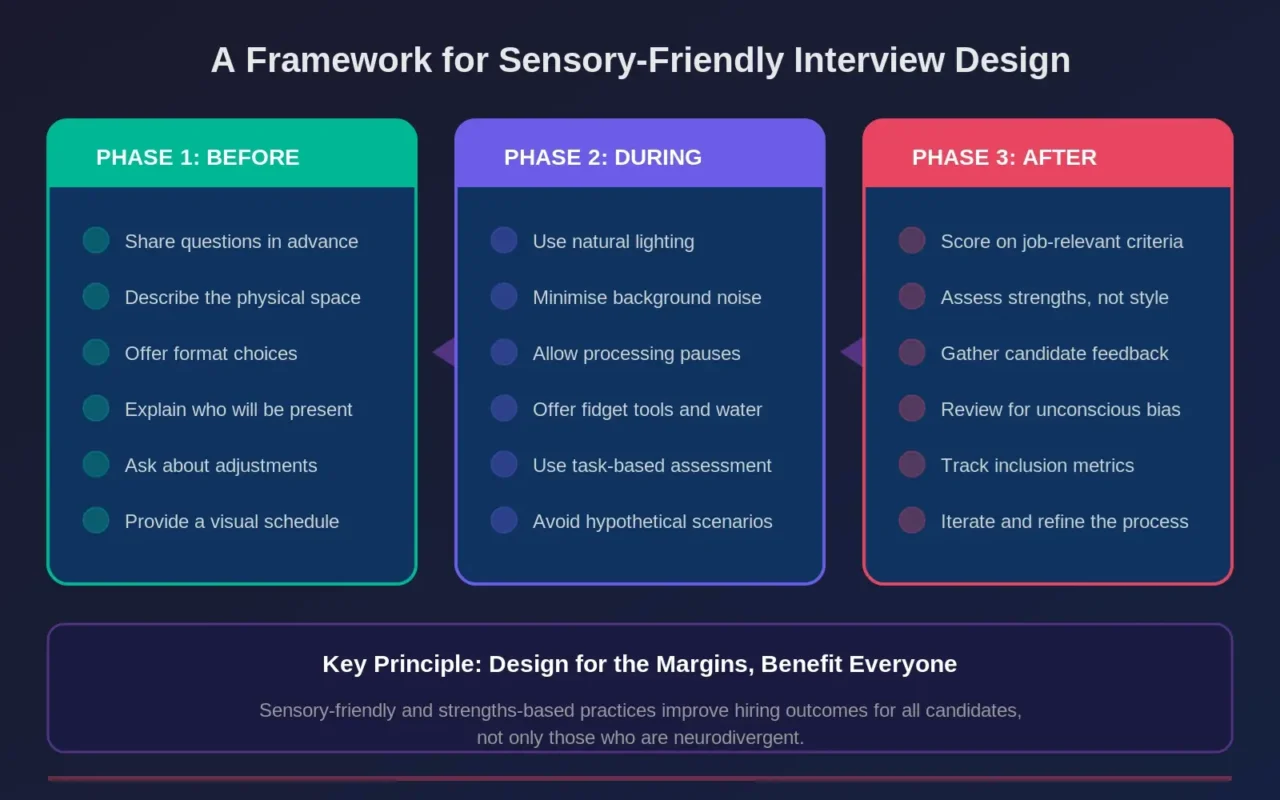
Figure 3: A practical framework for sensory-friendly interview design
Addressing the Inevitable Pushback
Whenever this conversation surfaces, certain objections recur. Won’t giving candidates questions in advance just mean everyone prepares the same polished answers? Doesn’t a “real” job require thinking on your feet?
These are fair questions with fairly clear answers. Providing questions ahead of time doesn’t eliminate differentiation — it shifts what you’re differentiating on. Instead of rewarding candidates who think fastest under pressure, you reward candidates who think most deeply when given the chance. For most knowledge-work roles, depth of thought is the more valuable competency. As for “thinking on your feet” — very few jobs genuinely require the kind of real-time verbal improvisation that interviews demand. And for those that do, a structured simulation is a far more valid assessment than an interview question.
The deeper resistance, though, often isn’t about logistics. It’s about identity. Many hiring managers have built their careers on excelling in traditional interview formats and instinctively trust their own ability to “read” candidates. Asking them to adopt structured, criteria-anchored assessment can feel like a repudiation of their professional judgement. The evidence on unstructured interviews, however, is unambiguous: they are among the least predictive selection methods available. We’re not asking people to give up something that works. We’re asking them to acknowledge that it doesn’t.
A Question of Who We’re Willing to See
The unemployment and underemployment rates among neurodivergent Australians are not a reflection of talent scarcity. They’re a reflection of process failure — a systematic inability, or unwillingness, to design hiring practices that actually measure what matters.
Sensory-friendly and strengths-based interviews aren’t a concession. They’re a correction. They bring assessment practices into alignment with what the research has shown for decades: that the best predictor of job performance is demonstrated competence in relevant tasks, not social presentation in a high-stakes, artificial setting.
The organisations that move first on this won’t just build more equitable workplaces. They’ll access a talent pool that their competitors are still, quite literally, designing out. And in a labour market as tight as Australia’s, that’s not just an ethical position. It’s a strategic one.